

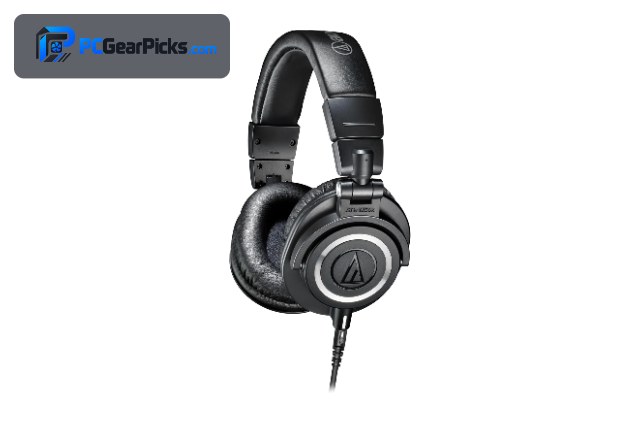
Video editing rewards accurate sound above all. You need to hear dialogue clearly, judge levels, and catch audio problems — hiss, clipping, bad cuts — which calls for a relatively flat, revealing headphone rather than the bass-boosted tuning most gaming headsets use. That’s why true studio monitors dominate the top of this list.
We’ll be straight about the trade-off: the most accurate picks here are studio headphones with no microphone. If you also need a mic for calls or voiceovers, a good headset like the DROP PC38X is the compromise, with the honest caveat that it’s less neutral than a studio can. Below we rank seven options for editing by accuracy, comfort, and whether they include a mic. See the peripherals hub and our programming headset guide for related picks.
Top 3 Best Editing Headphones at a Glance
Best Headphones for Video Editing in 2027
| Headset | Best For | Key Spec | Rating | Price |
|---|---|---|---|---|
| Audio-Technica ATH-M50x | Best Overall | Closed-back studio monitor | 4.7★ (33901) | Check Price |
| Sony MDR-7506 | Best Value Studio | Closed-back studio monitor | 4.7★ (28444) | Check Price |
| Audio-Technica ATH-M20x | Best Budget Studio | Closed-back studio monitor | 4.6★ (27343) | Check Price |
| DROP PC38X (Open-Back) | Best for Editing + Calls | Open-back, Sennheiser-tuned | 4.2★ (189) | Check Price |
| HyperX Cloud II | Best Headset Option | Wired USB, 53mm | 4.5★ (69261) | Check Price |
| SteelSeries Arctis Nova Pro Wireless | Best Wireless | Wireless 2.4GHz + Bluetooth | 4.2★ (3255) | Check Price |
| HyperX Cloud III (Wired) | Best Budget Headset Alternative | Wired USB/3.5mm, 53mm | 4.3★ (12988) | Check Price |
1. Audio-Technica ATH-M50x – Best Overall

- ✓ Industry-standard accurate sound
- ✓ Strong isolation for critical listening
- ✓ Durable, comfortable, foldable
- ✗ No microphone
- ✗ Bass is slightly forward of flat
The Audio-Technica ATH-M50x is a studio standard for a reason: detailed, reasonably accurate sound and strong isolation make it ideal for judging dialogue, music, and effects while you edit. It’s the headphone many creators trust for day-to-day monitoring.
It has no mic — these are studio headphones, not a chat headset — but for video editing, accurate monitoring matters far more than a boom mic. If you need to take calls, add a separate microphone.
Best for: Editors who want accurate, trusted monitoring
May not fit: Anyone needing a built-in mic for calls
2. Sony MDR-7506 – Best Value Studio

- ✓ Legendary studio workhorse
- ✓ Very revealing of detail and flaws
- ✓ Comfortable and foldable
- ✗ No mic
- ✗ Coiled cable, utilitarian look
The Sony MDR-7506 has been a fixture in editing suites and broadcast booths for decades. Its revealing, slightly analytical sound makes problems in your audio — hiss, clipping, bad edits — easy to catch, which is exactly what you want when editing.
With tens of thousands of positive ratings it’s a proven, affordable monitoring tool. Like the M50x it has no mic, so pair it with a separate one if you take calls.
Best for: Editors wanting a proven monitoring headphone cheaply
May not fit: Those who want a built-in mic or a modern look
3. Audio-Technica ATH-M20x – Best Budget Studio

- ✓ Accurate monitoring on a budget
- ✓ Comfortable and light
- ✓ Great entry into studio headphones
- ✗ No mic
- ✗ Less detailed than the M50x
The ATH-M20x is the budget gateway to studio-grade monitoring. It delivers a clean, honest sound that’s far more suitable for editing than a bass-boosted gaming headset, at a very friendly price.
It’s not as detailed or refined as the M50x or MDR-7506, but for a new editor who wants accurate monitoring without spending much, it’s an excellent first step. No mic, as with all studio cans here.
Best for: New editors wanting accurate sound on a budget
May not fit: Pros needing the last word in detail, or a mic
4. DROP PC38X (Open-Back) – Best for Editing + Calls

- ✓ Wide, natural soundstage for mixing
- ✓ Clear boom mic for calls
- ✓ Very comfortable for long edits
- ✗ Open-back leaks and lets noise in
- ✗ Not as neutral as closed studio cans
If you want one headset that both monitors well and handles calls, the DROP PC38X is the pick. Its open-back design gives a wide, natural soundstage that’s pleasant for long editing sessions and useful for judging spatial mixes.
It’s not as strictly neutral as closed studio monitors, and open-back leaks sound, so it’s best in a quiet room. But the included boom mic means it doubles as your meeting headset — a convenience the studio cans can’t match.
Best for: Editors who also need a mic for calls
May not fit: Those wanting the most neutral, isolated monitoring
5. HyperX Cloud II – Best Headset Option

- ✓ Comfortable with good isolation
- ✓ Clear detachable mic included
- ✓ Reliable all-rounder
- ✗ Tuned for gaming, not flat
- ✗ Virtual surround can colour audio
If you specifically want a headset — mic included — that can also handle editing duties, the HyperX Cloud II is a sensible all-rounder. Its closed-back design isolates well, and the detachable mic covers calls and voiceovers.
Be honest about the trade-off: like most gaming headsets it’s tuned with a bit of extra warmth rather than a flat studio response, so for critical colour-accurate audio work the studio monitors are better. For mixed editing-and-chat use, it’s convenient.
Best for: Creators who want one headset for editing and calls
May not fit: Those needing flat, reference-accurate sound
6. SteelSeries Arctis Nova Pro Wireless – Best Wireless

- ✓ Parametric EQ to tune toward flat
- ✓ Wireless convenience
- ✓ Good detail and ANC
- ✗ Expensive
- ✗ Wireless and processing add colour
The Arctis Nova Pro Wireless is the pick if you want wireless freedom at the editing desk. Its parametric EQ lets you tune the sound toward a flatter response, and it’s detailed enough for general editing and review work.
Purists will still prefer wired studio monitors for reference-critical work, and the wireless chain adds some processing, but for an editor who values convenience and a built-in mic, it’s a capable premium choice.
Best for: Editors wanting wireless with tunable sound and a mic
May not fit: Reference-critical mixing that demands flat wired cans
7. HyperX Cloud III (Wired) – Best Budget Headset Alternative

- ✓ Comfortable with decent isolation
- ✓ Mic included for calls and voiceover
- ✓ Affordable all-rounder
- ✗ Gaming tuning, not neutral
- ✗ Minor step over Cloud II
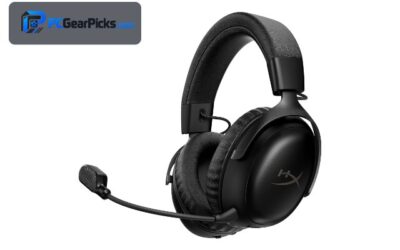
The HyperX Cloud III is a budget-friendly headset alternative for editors who want a mic built in. It isolates reasonably, is comfortable for long sessions, and its flip-to-mute mic handles voiceovers and calls.
As with other gaming headsets, its sound is tuned for enjoyment rather than studio accuracy, so lean on studio monitors for critical audio. For casual editing plus chat, it’s a comfortable, affordable option.
Best for: Budget creators wanting a mic-equipped all-rounder
May not fit: Accuracy-focused audio and colour work
How to Choose Headphones for Video Editing
Accuracy beats excitement
For editing you want a relatively flat, revealing sound so you hear the audio as it really is, not an enhanced version. Studio monitors like the ATH-M50x and Sony MDR-7506 are tuned for this, which is why they’re editing-suite staples; most gaming headsets add warmth that hides flaws.
Closed-back vs open-back for editing
Closed-back studio cans isolate you and contain sound, ideal for noisy rooms and shared spaces. Open-back designs like the DROP PC38X give a wider soundstage that helps judge spatial mixes but leak audio — use them only in a quiet room.
Do you need a built-in mic?
Pure editing doesn’t require a mic, so the best monitoring picks omit it. If you record voiceovers or take calls, either add a separate microphone to a pair of studio cans or choose a headset like the DROP PC38X or HyperX Cloud II that includes one.
Comfort for long sessions
Editing sessions run long, so comfort matters. The ATH-M50x, MDR-7506, and PC38X are all proven for extended wear. Check clamp force and ear-cup size against your head, especially if you wear glasses.
Wired vs wireless for monitoring
Wired headphones avoid the processing and latency of wireless, which is why reference monitoring stays wired. Wireless models like the Arctis Nova Pro add convenience and a mic, with parametric EQ to tune the sound, but purists keep critical work on wired studio cans.
Frequently Asked Questions
What is the best headphone for video editing in 2027?
The Audio-Technica ATH-M50x is our overall pick for its accurate, detailed sound and strong isolation — a studio standard for monitoring. The Sony MDR-7506 is the best value, and the budget ATH-M20x is a great entry point. All are headphones without mics.
Are gaming headsets good for video editing?
They’re convenient because they include a mic, but most are tuned with extra bass that hides audio flaws, so they’re less accurate than studio monitors. For casual editing plus calls, a headset like the HyperX Cloud II works; for critical audio, use studio headphones.
Do I need an open-back or closed-back headphone for editing?
Closed-back studio monitors isolate you and suit most editing, especially in shared or noisy rooms. Open-back designs like the DROP PC38X give a wider soundstage for judging spatial mixes but leak sound, so reserve them for a quiet space.
What if I need a microphone too?
Either add a separate microphone to a pair of studio headphones like the ATH-M50x, or choose a headset that includes a mic, such as the DROP PC38X (best sound) or HyperX Cloud II. Just know a headset mic trades some monitoring accuracy for the convenience.
Is a wireless headset okay for editing?
For casual editing and review, yes — the Arctis Nova Pro Wireless even has parametric EQ to tune toward a flatter sound and includes a mic. For reference-critical mixing, wired studio monitors remain the standard because they avoid wireless processing.
Final Verdict
For video editing, accuracy wins. The Audio-Technica ATH-M50x is the best all-round monitoring headphone, the Sony MDR-7506 is the proven value, and the ATH-M20x is the budget entry — all studio cans without mics. If you also need a mic, the DROP PC38X is the best compromise, just slightly less neutral than true studio monitors. Match the choice to whether accuracy or an included mic matters more. See our programming headset guide for the all-day-comfort angle.
No reviews yet. Be the first to share your experience!